Paul Racer Mounting January 28 2013, 0 Comments
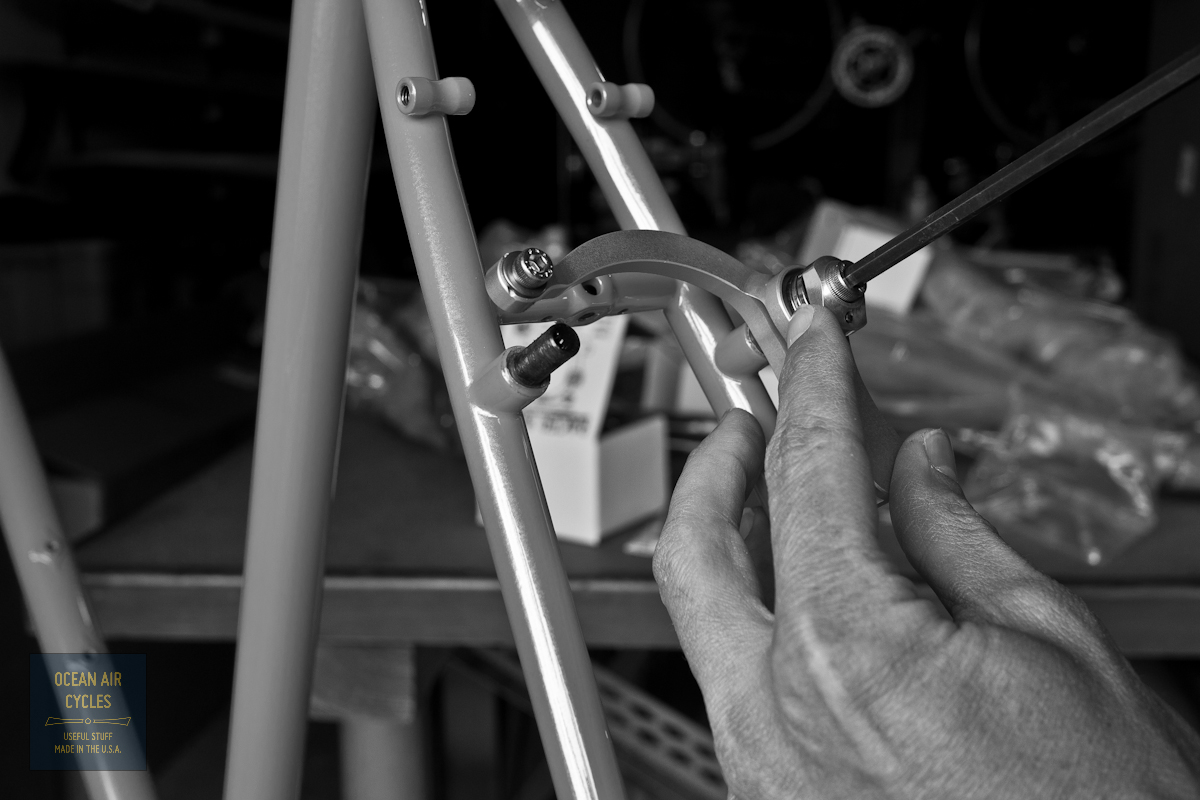

 Almost there!
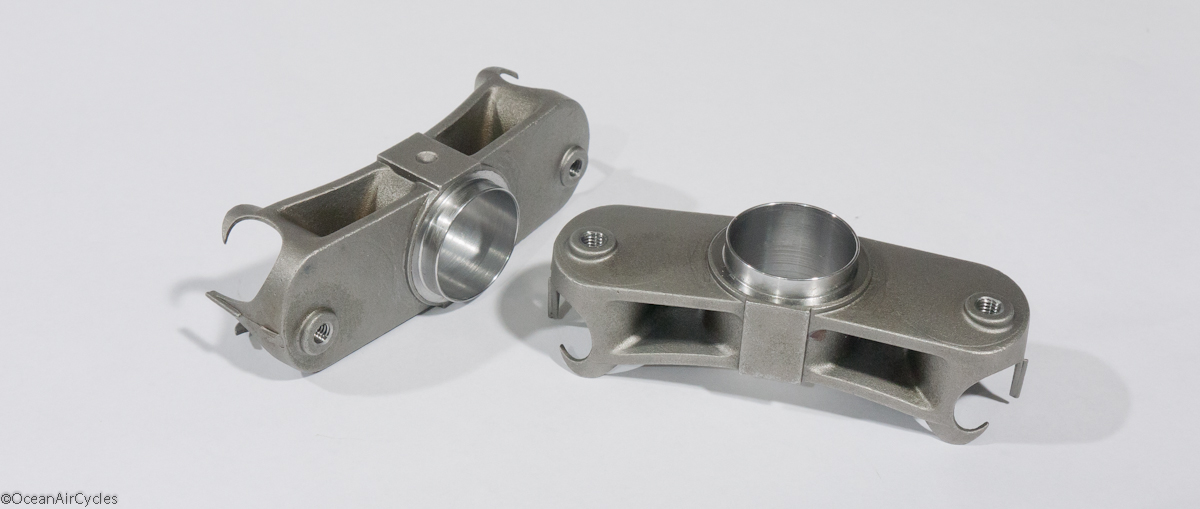 Until now if you were working on a Porteur / Randonneur style of bike you options were limited to bosses that were hand brazed into the top of the fork. Having the bosses as an integral part of the casting will shave man hours and result in a stronger more consistent product. These crowns will make this style of front rack mount more approachable for builders and designers.
There are a couple of strong benefits to having crown mounted rack bosses. Foremost is the added stiffness you will get from a rack with two well spaced upper mounting points as opposed to the more common single point in the center. Running a close second is having redundancy of upper mounting points, two is better than one. If a bolt were to come loose or a rack strut fail, the loaded rack is less likely to immediately drop into the rider's front wheel. I believe this mode of failure is more common than thought if the number CPSC recall notices on production front racks is any indicator.
I hope that by pushing this fork to market we will see an increase in the number of well designed front loading bikes and front racks on the market in the coming years. The crown specs are the same to the existing Paris Brest in every way other than the added rack bosses. Spacing between holes is 80mm. If we as designers and builders were to adopt this as a standard it will help with the proliferation of the niche. bringing a level of consistency across brands.
After talking with Kirk today, these crowns will be available through Bikelugs.com in 6-8 weeks.
Until now if you were working on a Porteur / Randonneur style of bike you options were limited to bosses that were hand brazed into the top of the fork. Having the bosses as an integral part of the casting will shave man hours and result in a stronger more consistent product. These crowns will make this style of front rack mount more approachable for builders and designers.
There are a couple of strong benefits to having crown mounted rack bosses. Foremost is the added stiffness you will get from a rack with two well spaced upper mounting points as opposed to the more common single point in the center. Running a close second is having redundancy of upper mounting points, two is better than one. If a bolt were to come loose or a rack strut fail, the loaded rack is less likely to immediately drop into the rider's front wheel. I believe this mode of failure is more common than thought if the number CPSC recall notices on production front racks is any indicator.
I hope that by pushing this fork to market we will see an increase in the number of well designed front loading bikes and front racks on the market in the coming years. The crown specs are the same to the existing Paris Brest in every way other than the added rack bosses. Spacing between holes is 80mm. If we as designers and builders were to adopt this as a standard it will help with the proliferation of the niche. bringing a level of consistency across brands.
After talking with Kirk today, these crowns will be available through Bikelugs.com in 6-8 weeks.
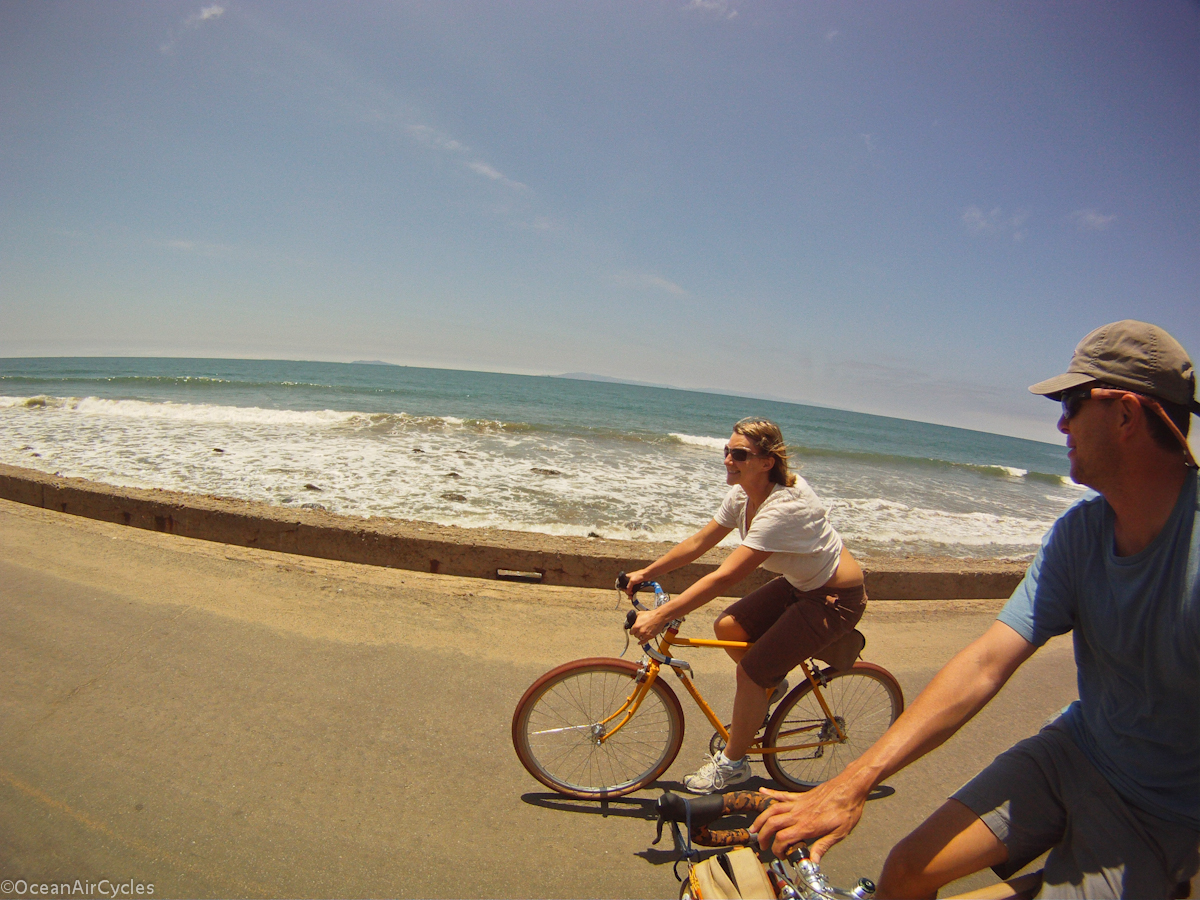
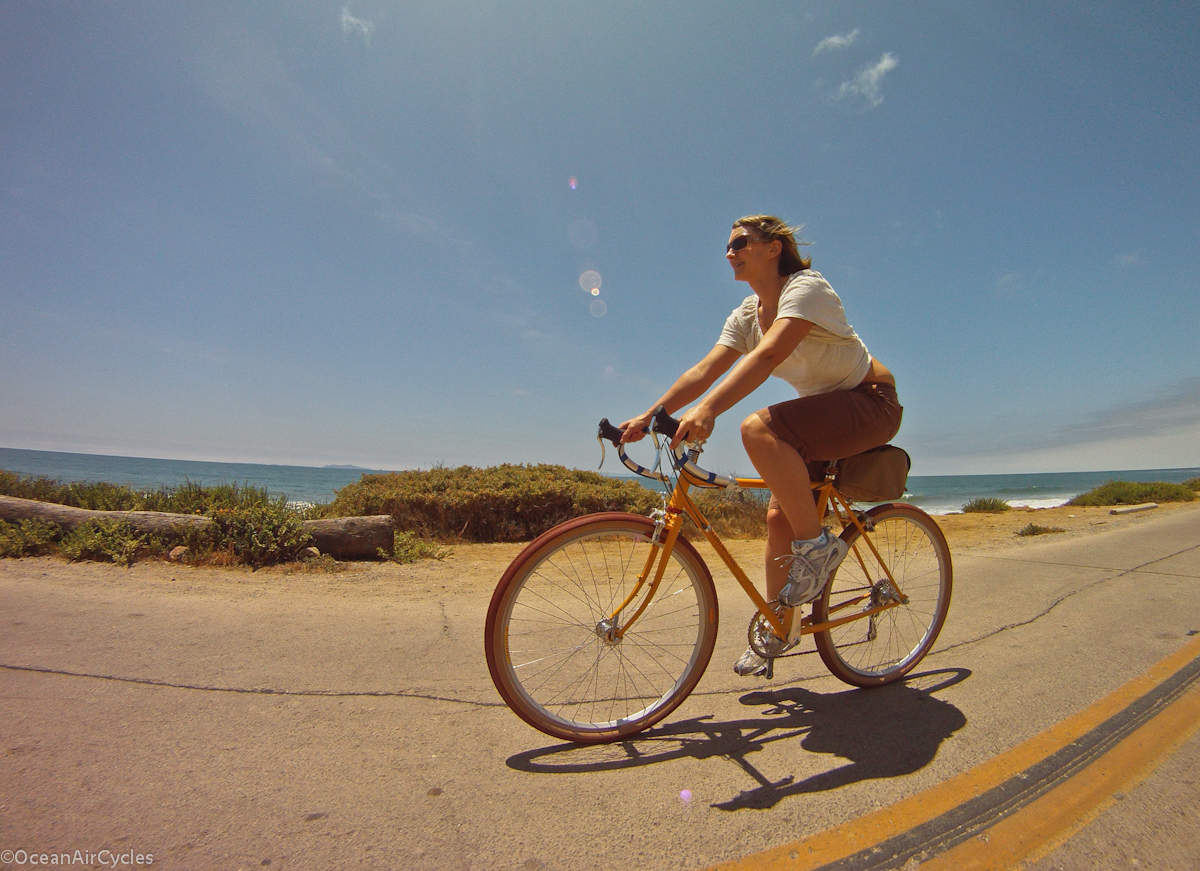 After years of trying to find an off the rack bike that will fit my wife and smaller friends properly it looks like we have a winner. A common problem with many smaller frames is an overly long top tube combined with a steep seat tube. IF the rider is even able to get the saddle into the proper position with a conventional seatpost, the reach to the bars is usually far too long. The most common fix is to push the saddle forward and throw on a super short stem. Unfortunately this often results in too much weight on the hands, possible knee pain and a generally poor fit for the smaller riders.
The 51 Rambler solves this issue with a 51cm top tube and 73deg seat tube angle. This keeps the drop bars at a comfortable distance with a properly positioned Brooks saddle. After more modern shop bike test rides, and a few vintage offerings that have passed through our stable, this is the first time ever that I have had her on a bike with drop bars and seen a smile.
The next step is fine tuning a few things, wrapping the bars, likely swapping out the Hetres for PariMoto tires and getting her Honjo fenders dialed in. More pictures soon!
After years of trying to find an off the rack bike that will fit my wife and smaller friends properly it looks like we have a winner. A common problem with many smaller frames is an overly long top tube combined with a steep seat tube. IF the rider is even able to get the saddle into the proper position with a conventional seatpost, the reach to the bars is usually far too long. The most common fix is to push the saddle forward and throw on a super short stem. Unfortunately this often results in too much weight on the hands, possible knee pain and a generally poor fit for the smaller riders.
The 51 Rambler solves this issue with a 51cm top tube and 73deg seat tube angle. This keeps the drop bars at a comfortable distance with a properly positioned Brooks saddle. After more modern shop bike test rides, and a few vintage offerings that have passed through our stable, this is the first time ever that I have had her on a bike with drop bars and seen a smile.
The next step is fine tuning a few things, wrapping the bars, likely swapping out the Hetres for PariMoto tires and getting her Honjo fenders dialed in. More pictures soon!
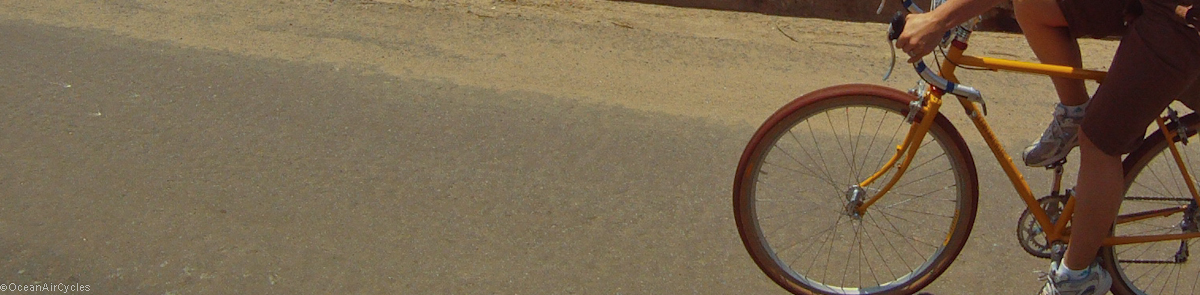
 Thank you all at Zen for making my ideas into a reality, looking forward to a good year.
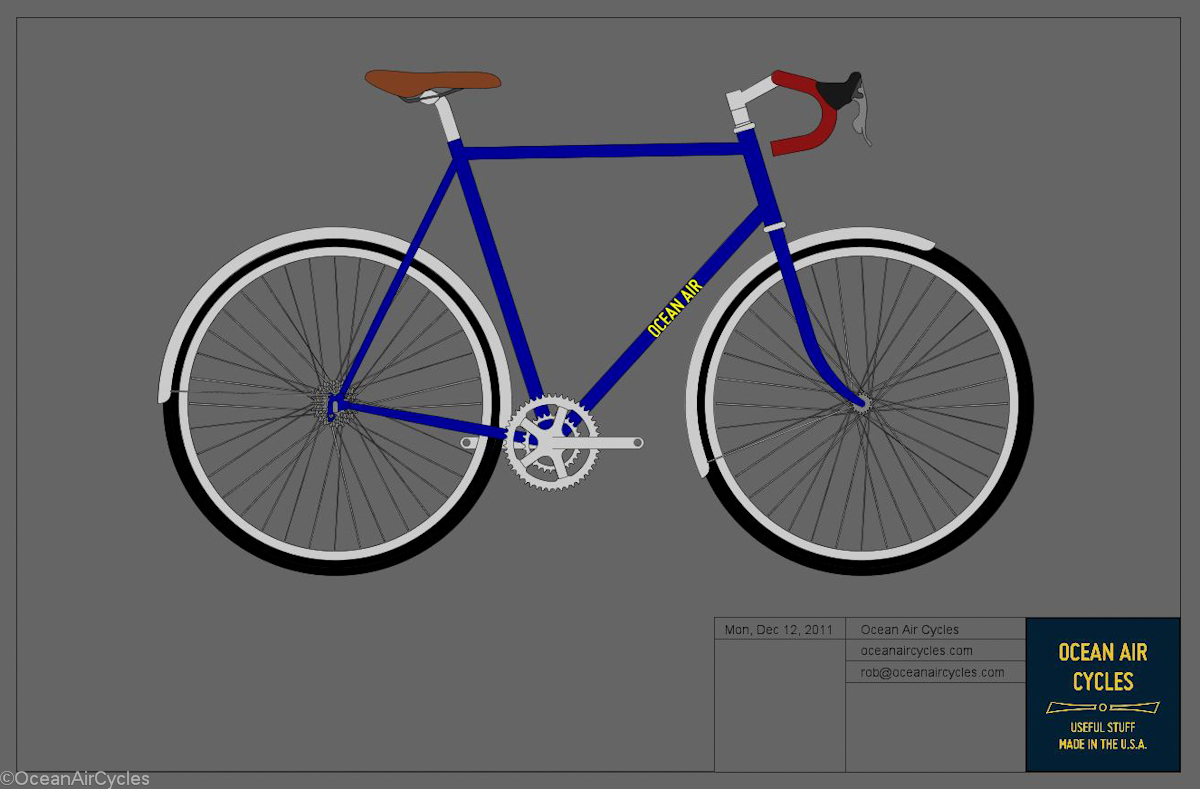 With years of personal research and design study I have addressed these issues with a bike steeped in the lineage of the traditional french touring bikes. Using modern production techniques and partnering with a U.S. fabrication team to deliver the look and function you are after with a few bells and whistles thrown in. The ride will be light and sporty, yet stable with loads for you commute, day rides or the occasional quick load of groceries up front. It goes without saying there will be provisions for full coverage fenders to keep you and the bike clean during year round riding. This is the bike you will want for rambles through the countryside, distance rides and randonees, and still able to be your daily steed. All of this at a price that is competitive in the current market.
The sport touring frame set project is moving along as planned. The Design spec and engineering is settled in at to 95% point and I am comfortable releasing my Geometry and Tubing Spec:
The line has a range of even sizes from 50 through 62 measures Center of bottom bracket to the center of the intersection with the top tube. When comparing this to traditional road frames or the size you may ride in your regular bike, consider that the size in the chart will be about 1 to 2 cm smaller due to the distance from the center of the top tube to the top and the generous bottom bracket drop. For example I ride a 63 or 64 on my Roadeo and Eisentraut, but the 62 above is designed around my needs.
With years of personal research and design study I have addressed these issues with a bike steeped in the lineage of the traditional french touring bikes. Using modern production techniques and partnering with a U.S. fabrication team to deliver the look and function you are after with a few bells and whistles thrown in. The ride will be light and sporty, yet stable with loads for you commute, day rides or the occasional quick load of groceries up front. It goes without saying there will be provisions for full coverage fenders to keep you and the bike clean during year round riding. This is the bike you will want for rambles through the countryside, distance rides and randonees, and still able to be your daily steed. All of this at a price that is competitive in the current market.
The sport touring frame set project is moving along as planned. The Design spec and engineering is settled in at to 95% point and I am comfortable releasing my Geometry and Tubing Spec:
The line has a range of even sizes from 50 through 62 measures Center of bottom bracket to the center of the intersection with the top tube. When comparing this to traditional road frames or the size you may ride in your regular bike, consider that the size in the chart will be about 1 to 2 cm smaller due to the distance from the center of the top tube to the top and the generous bottom bracket drop. For example I ride a 63 or 64 on my Roadeo and Eisentraut, but the 62 above is designed around my needs.
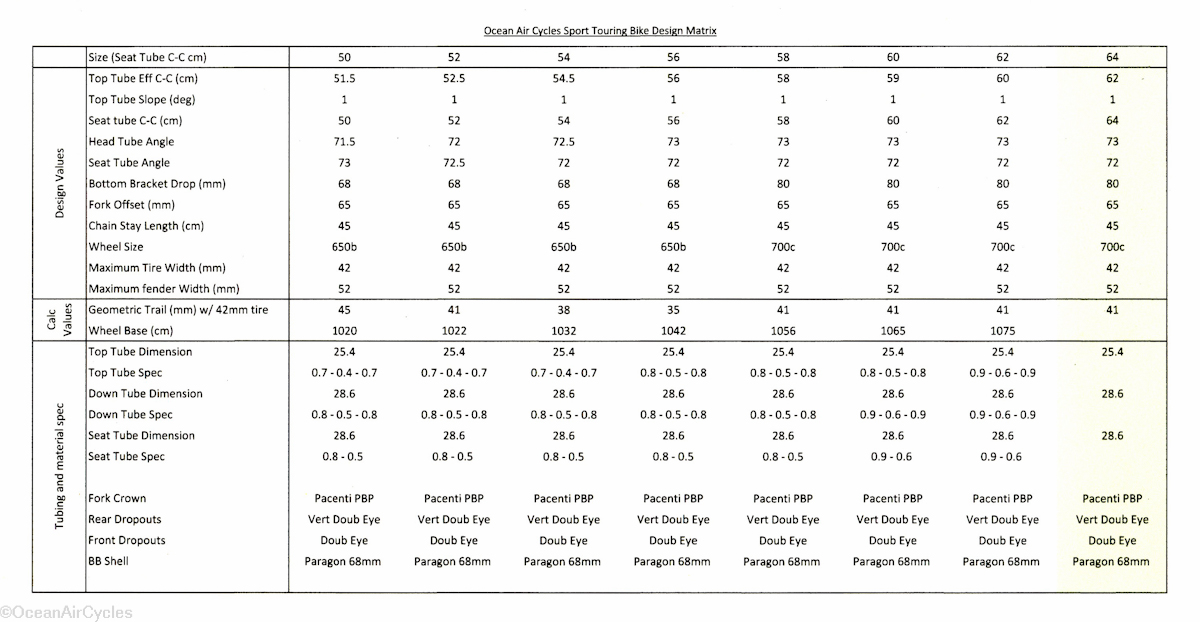 Other things to consider with the spec: